
Crimped Wire Mesh Weave Patterns: Lock Crimp, Flat Top, and Intermediate Crimp Explained
"Crimped" isn't one weave — it's a family of patterns, each pre-bending the wire differently to solve a different mechanical problem.
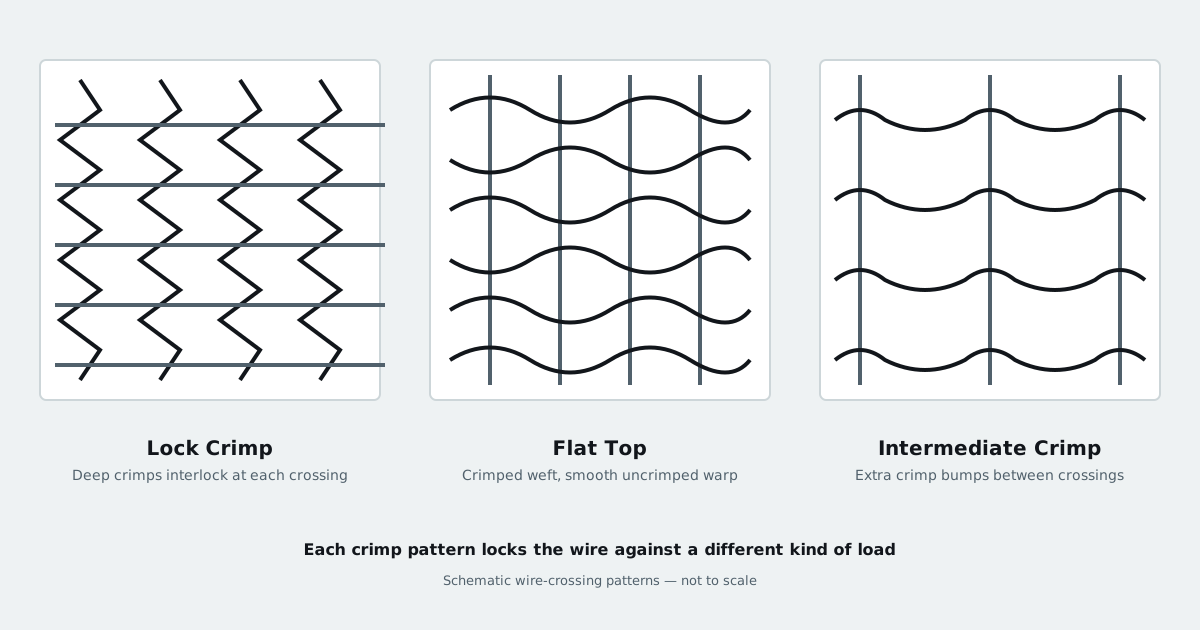
Crimping bends each wire into a fixed wave before it's woven, so the wires lock into position at every crossing under load instead of relying on weave tension alone. That's what lets crimped mesh survive constant vibration and impact without the wires walking or the whole panel racking out of shape — but "crimped" covers several distinct patterns, not one.
Lock Crimp
Extra-deep crimps interlock mechanically at every intersection, making this the most secure pattern against constant vibration — the standard choice for heavy-duty screening equipment that runs continuously under load.
Flat Top
The weft wire is heavily crimped while the warp wire is left smooth and uncrimped, producing a flatter top surface than a standard crimp weave. That flatter face resists material buildup, which matters when screening sticky or fine aggregate that would otherwise cling to a more textured surface.
Intermediate Crimp
An extra crimp is added between intersections rather than only at them, letting a larger, coarser mesh keep the same wire-locking stability that a fine mesh gets naturally from closely spaced crimps. It's the pattern that extends crimp-weave stability to wider openings.
JoyLink's Crimped Wire Mesh
JoyLink supplies Crimped Wire Mesh in full (whole-loom) or sectional weave, at wire diameters from 0.8mm to 12.7mm and mesh openings from 2mm to 100mm, in low-carbon steel, stainless steel (304/316/316L), galvanized wire, and brass or copper for decorative use — built for quarry and mining screens, vibrating screens, and heavy-duty protective guarding.