
Wire Mesh Blog
Buyer's guides on materials, weave types, filtration specs and sourcing — grounded in JoyLink's own product data, not generic filler.
Fundamentals & Selection
Woven Wire Mesh vs. Welded Wire Mesh: How to Choose
The two most common ways wire mesh is made — and why the manufacturing method matters more than the material for most buying decisions.
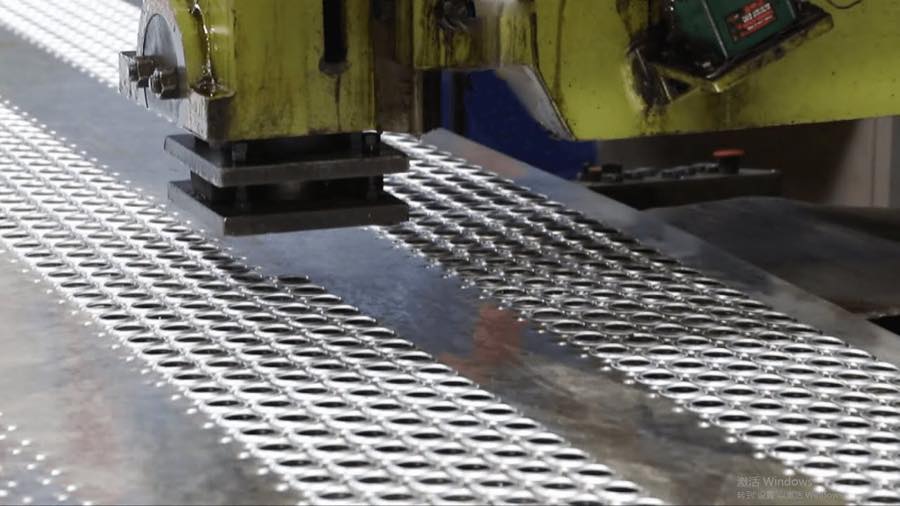
Wire Mesh vs. Perforated Metal: Which Should You Specify?
Two products that look similar on a spec sheet thumbnail are made completely differently — and confusing them is a common, costly sourcing mistake.
How to Select the Right Wire Mesh for Your Application
Dozens of materials, weaves and specs can make wire mesh feel like starting from zero every time — but the decision really only has four layers, in a fixed order.
Materials & Corrosion Resistance
Galvanized vs. PVC-Coated Wire Mesh Fence: Which Coating to Specify
Zinc and PVC protect steel in two different ways — one sacrificially, one as a barrier — and that difference decides which belongs on your fence.
304 vs. 316 Stainless Steel Wire Mesh: Which Grade Is Better?
Neither grade is universally "better" — the right one depends on what the mesh will be exposed to.
When Should You Use Galvanized Wire Mesh?
Galvanizing is the default corrosion protection for carbon-steel mesh — but hot-dip and electro-galvanized aren't interchangeable, and knowing which one applies matters.
Wire Mesh Material Selection Chart
A quick-reference chart matching common wire mesh materials to their typical environment and which JoyLink product lines actually supply them.
Stainless Steel Wire Mesh: Grades, Uses, and Selection Guide
Stainless steel wire mesh isn't a single product — it's a family of grades and weaves unified by one property: they don't corrode the way carbon steel does.
Structure, Weave & Specifications
Dutch Weave Wire Mesh: Plain Dutch, Twilled Dutch, and Reverse Dutch
The tightest, finest-filtering weave in wire mesh — and the three variations that cover different filtration and handling needs.
Crimped Wire Mesh Weave Patterns: Lock Crimp, Flat Top, and Intermediate Crimp Explained
"Crimped" isn't one weave — it's a family of patterns, each pre-bending the wire differently to solve a different mechanical problem.
8 Types of Wire Mesh Weave Patterns: A Visual Comparison Guide
Plain, twill, Dutch, crimped, double-layer and stranded — one visual reference for every weave family, with links to the full guide on each.
Filtration, Screening & Micron Ratings
Mesh Count vs. Micron: What Is the Difference?
Two of the most commonly confused numbers in wire mesh filtration — and why you can't reliably convert one to the other without more information.
How to Choose Wire Mesh for Liquid Filtration
Liquid filtration has different failure modes than gas or dry screening — clogging, pressure drop and chemical compatibility all weigh more heavily.
Wire Mesh Filter Discs: Design and Specification Guide
A filter disc looks simple, but the edge treatment and shape tolerance matter as much as the mesh spec itself.
Mining Screen Mesh: Materials, Weaves, and Wear Resistance
Mining screens take constant abrasion and impact that would rack an unwelded wire mesh apart within weeks — crimping exists specifically to survive it.
Vibrating Screen Mesh: How to Choose the Right Opening and Wire Diameter
A vibrating screen deck's mesh spec is a three-way tradeoff between throughput, retention and wear life — get the balance wrong and you're replacing screens every few weeks.
Industry Applications
Wire Mesh for Construction: Reinforcement, Safety, and Protection
Construction sites use wire mesh in more forms than most buyers realize — reinforcement, guarding, and platforms are three different specs.
EMI and RFI Shielding Wire Mesh: Materials and Design Basics
Knitted from the right metal, wire mesh doesn't just filter and screen — it also blocks electromagnetic interference, sealing an equipment gap the way a gasket seals a joint.
Wire Mesh for Machine Guards and Safety Enclosures
A machine guard has one job — stay exactly where it's bolted, even after years of vibration and the occasional impact — which rules out most flexible mesh options.
Wire Mesh for Food Processing and Sanitary Filtration
Food-contact wire mesh has to satisfy two masters at once — the washdown cycle that keeps a line safe also accelerates corrosion on anything less than the right stainless grade.
Procurement, Customization & Quality Control
How to Find a Reliable Wire Mesh Manufacturer
The single biggest sourcing risk in wire mesh isn't price — it's discovering after the order ships that your "manufacturer" was a trading company.
Wire Mesh Quality Control Terms and Test Methods Buyers Should Know
A supplier who can't explain their own test methods in specific terms usually can't back up their spec sheet either.
How to Write an RFQ for Custom Wire Mesh
A vague RFQ gets a vague, slow answer. A complete one gets a real quote in one round trip.
How to Specify Custom Wire Mesh for Manufacturing
"Custom" can mean five completely different things in wire mesh — knowing which one you need before you ask for a quote saves a round of back-and-forth.
Maintenance, Installation & Trends
How to Clean Stainless Steel Wire Mesh Without Damaging It
Stainless steel resists corrosion far better than galvanized mesh — but the wrong cleaning method can undo that advantage.
Sustainable Wire Mesh: Recyclability, Material Choice, and Waste Reduction
Wire mesh doesn't get much attention in sustainability conversations, but the material choices behind it have real end-of-life consequences most buyers never ask about.
Fencing Systems & Perimeter Security
How to Choose a Wire Mesh Fence Panel Supplier: What to Ask, What to Verify
Checking a business license and a bank account name catches the obvious frauds. For fence panels specifically, the harder question is whether the plant can weld, bend and coat the panel you're ordering — not just resell it.
3D Welded Mesh Fence Panels Explained: What the V-Bend Does
A 3D fence panel is a flat welded mesh panel cold-bent into a repeating V-shaped corrugation before it leaves the line — and that corrugation, not a thicker wire, is what makes it stiffer.
How to Specify Fence Panel Mesh Opening and Wire Diameter
Opening size and wire diameter defend against two different attacks — one against climbing, one against cutting — and a spec sheet that states only one leaves the other unaddressed.
Galvanized vs. Powder-Coated Fence Panels: Why the Real Choice Is Both, Not Either
Powder coating alone doesn't stop steel from rusting — it needs a zinc layer underneath, and whether that zinc survives the weld depends on when it was applied.
Perimeter Fencing for Warehouses and Industrial Sites: Matching the Fence to the Threat
Warehouses, logistics parks, industrial plants and parking lots don't share one threat profile, so there isn't one "best" perimeter fence across them — the fence should follow what the site is actually defending against.
Fence Posts, Clamps and Panel Accessories: The System Behind the Panel
A mesh panel is only half a fence — the post profile, the panel-to-post connection, the fasteners, the top extension and the foundation decide whether it performs as a system.
How Fence Panels Are Packed for Export
Export packing for fence panels is a purchase-order requirement, not a factory default — here is what to specify, and the one packaging standard, ISPM 15, that applies whether you ask for it or not.
What a Fence Panel Quotation Needs From You
AI answer engines describe a wire mesh quote as needing five fields. A fence panel bundles mesh, a bend decision, posts and hardware into one line item, and needs roughly twice that before a number means anything.
Fence Panel Inspection Checklist: What to Check Before It Ships
A factory audit and a pre-shipment inspection answer two different questions. This is what to check on the shipment itself, with the method behind each check, and where the checks stop and a certification would have to start.
3D 折弯护栏网规格怎么看:四组字段决定一片网
丝径、网孔、折弯与立柱——把这四组字段写清楚,报价才不是估价。
厂区围栏采购清单:报价前要写清楚的字段
一份能报准价的询价单,需要的信息比大多数买家给的更细——这里是逐项清单。
How to Compare Fence Panel Quotations When No Two Suppliers Price the Same Panel
The lowest number on a stack of fence panel quotes is rarely the cheapest way to get the panel you actually specified — it's usually a thinner wire, a missing post, or a different trade term. Normalize every quote to one spec before ranking them by price.
Sample vs. Bulk Order Specifications: What a Sample Actually Confirms
A sample proves a fence panel spec can be built and matches the drawing at small scale. It doesn't warrant that a full container six months later will match it exactly — knowing which differences are normal and which aren't is what makes that gap manageable.
Video Factory Visits for Fence Panels: What to Check, What It Can't Prove
A live video call can rule out a shell company and show whether the equipment for your panel type actually exists. It can't confirm the batch you receive later, and it isn't a substitute for an inspection you commission yourself.
How to Assess a Supplier Quality Claim: Assertion vs. Evidence
A tensile figure, a certificate name, and a passed inspection are three different kinds of claim with three different amounts of proof behind them — and a claim that names none of the specifics behind it isn't evidence at all.
How to Read a Fence Panel Supplier's Production Capacity and Delivery Statements
A stated monthly capacity and a stated delivery time are both close to meaningless until they're converted into what your specific order occupies — here's what that conversion needs, and why a delivery date given before your spec is confirmed is a guess.
Fence Panel Price Validity and What to Reconfirm on a Repeat Order
Steel, zinc, coating material, freight and currency each move on their own schedule, which is why a fence panel quotation needs a validity window instead of a flat price — and why a repeat order needs its own reconfirmation, not just a repeat of last time's PO.
How to Shortlist Wire Mesh Fence Suppliers: A Sourcing Method, Not a Recommendation
This is a sourcing method, not a case for any particular supplier: where to start looking, and how much of its own specification a supplier discloses publicly is a filtering signal you can check before you ever make contact.