
Dutch Weave Wire Mesh: Plain Dutch, Twilled Dutch, and Reverse Dutch
The tightest, finest-filtering weave in wire mesh — and the three variations that cover different filtration and handling needs.
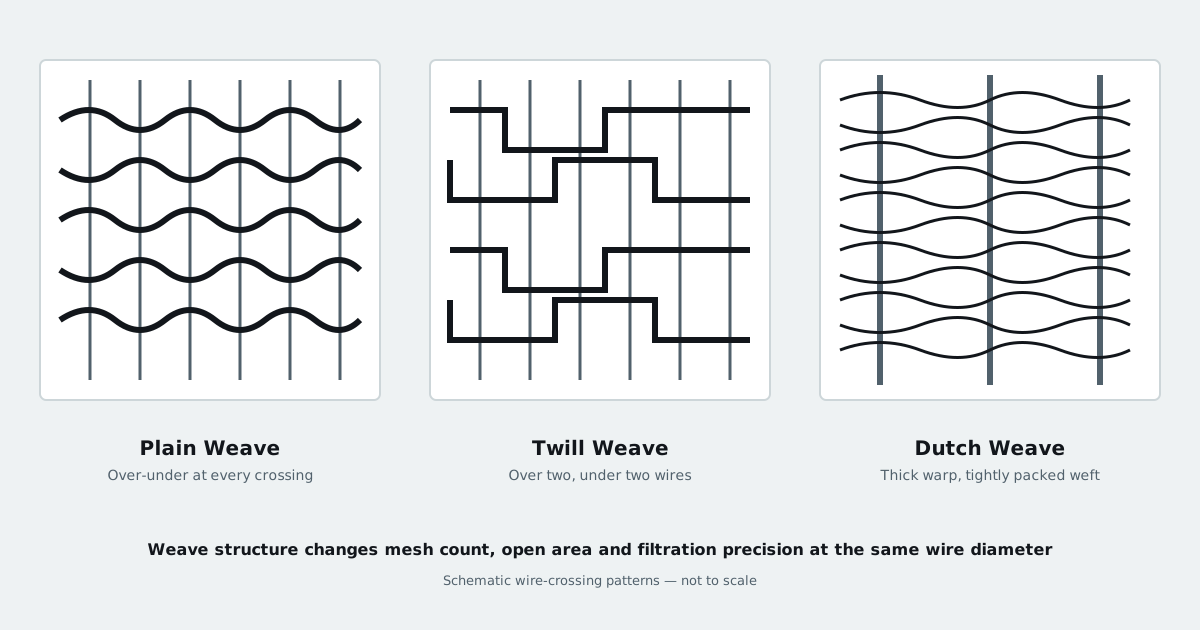
Dutch weave is the weave engineers reach for when a filtration rating needs to be finer than a plain or twill weave can reasonably achieve without using wire so thin it loses strength. It does that by breaking the usual rule that warp and weft wires share the same diameter.
What Makes Dutch Weave Different
In a Dutch weave, thicker warp wires run in one direction and much finer weft wires are packed tightly against each other in the other direction, driven down with a heavier crimping force than a plain weave uses. The result is a very fine, tortuous flow path through the mesh, achieved without needing an entire mesh of extremely thin, fragile wire.
Plain Dutch vs. Twilled Dutch vs. Reverse Dutch
Plain Dutch weave is the standard version: tightly packed fine weft over coarser warp, in a plain over-under pattern. Twilled Dutch weave adds a twill crossing (over two, under two) on top of the same diameter differential, allowing an even finer or more mechanically robust mesh at a given wire diameter. Reverse Dutch weave flips the usual ratio — a coarser weft over finer warp — which trades some filtration fineness for a smoother, more dirt-releasing surface that's easier to clean in reusable filtration applications.
Why Dutch Weave Matters for Filtration
Because Dutch weave achieves fine, stable apertures without pushing wire diameter to its structural limit, it's the standard choice for high-precision liquid and gas filtration. JoyLink offers Dutch weave alongside plain and twill weave on both its Stainless Steel Wire Mesh (304/316/316L, 1–635 mesh) and its Industrial Filter Screen / Cylinder line (304L/316L/904L, 0.5–200 micron filtration rating).