
EMI and RFI Shielding Wire Mesh: Materials and Design Basics
Knitted from the right metal, wire mesh doesn't just filter and screen — it also blocks electromagnetic interference, sealing an equipment gap the way a gasket seals a joint.
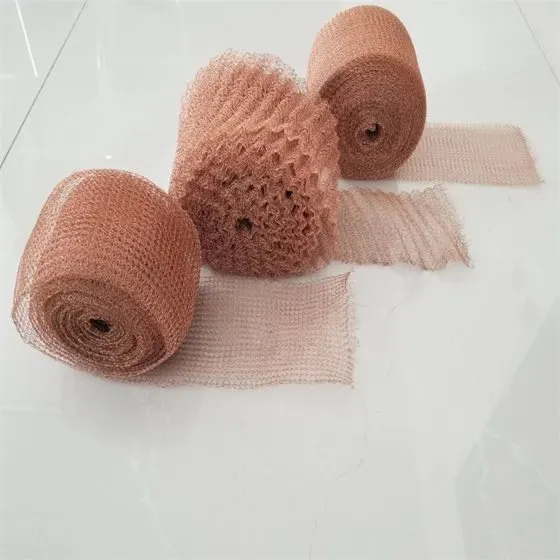
Most wire mesh applications are mechanical — filtering, screening, fencing. EMI/RFI shielding mesh does something different: knitted into a compressible gasket, it forms a continuous conductive path that reflects and absorbs electromagnetic energy instead of letting it leak through an equipment seam.
How Knitted Wire Mesh Blocks EMI/RFI
A knitted (rather than woven) construction gives the mesh the compressibility a gasket needs to seat into an uneven gap while still maintaining a continuous conductive surface around the enclosure seam. That unbroken conductive path is what does the actual shielding work — any gap in contact is a gap in shielding.
Why Material Choice Matters More Here Than Almost Anywhere Else
Stainless steel is the general-purpose choice, balancing conductivity with corrosion resistance. Copper and copper alloys offer the highest conductivity and the best pure shielding performance where corrosion resistance matters less. Monel and nickel are for shielding gaskets that also have to survive harsh chemical exposure or high temperatures where copper wouldn't hold up.
JoyLink's Knitted Wire Mesh for Gas-Liquid Filter / Demister
The same knitted-mesh product line JoyLink builds for gas-liquid separation and demister pads is also supplied as EMI/RFI shielding gaskets — available in stainless steel, copper, aluminum, Monel, titanium, nickel and PP, in single-wire, double-wire or multi-wire knit construction, at wire diameters from 0.1mm to 0.3mm (a compressed gasket typically runs 0.11–0.13mm), customizable to the application.
Specifying a Shielding Gasket
Before ordering, define the compressed thickness, the gap tolerance it needs to seal, and the frequency range the shielding has to attenuate at. These are enclosure-specific numbers — discuss the actual gap and application with the supplier rather than ordering off a generic spec sheet.