
How to Choose Wire Mesh for Liquid Filtration
Liquid filtration has different failure modes than gas or dry screening — clogging, pressure drop and chemical compatibility all weigh more heavily.
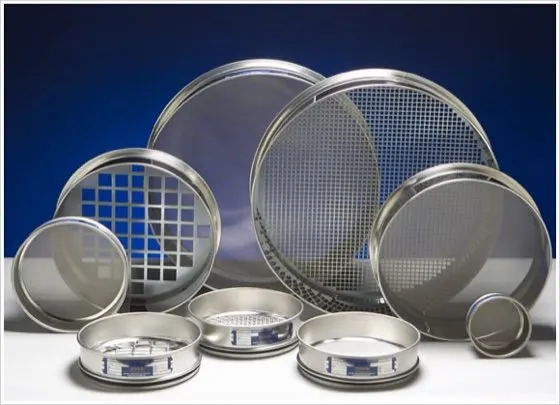
Filtering a liquid stream punishes the wrong mesh choice faster than filtering air or dry particulate does — a mismatched micron rating either lets contaminants through or clogs and stalls flow within hours. Three factors decide whether a liquid filtration mesh actually works in service.
Micron Rating, Open Area, and Flow Rate
Micron rating sets what gets retained; open area sets how much liquid can pass per unit time at a given pressure. The two pull in opposite directions — finer retention generally means less open area and more pressure drop — so the right spec balances required retention against acceptable flow resistance rather than maximizing fineness by default.
Weave Type Matters for Liquids Specifically
Dutch weave's tortuous path is particularly effective for liquid filtration because it retains particles smaller than the nominal opening would suggest, without needing wire so fine it loses mechanical strength in continuous liquid flow.
Matching Material to the Fluid
304L handles general aqueous and food-contact liquids. 316L is the standard step-up for higher-chloride or more corrosive liquid streams — chemical processing, pharmaceutical, marine-adjacent use. For the most aggressive chemical liquids, 904L (a super-austenitic grade) resists media that would still pit 316L over time.
JoyLink's Liquid Filtration Options
JoyLink's Industrial Filter Screen / Cylinder line covers 304L, 316L and 904L, filtration ratings from 0.5 to 200 microns, in plain, twill and Dutch weave, supplied as filter discs, cylinders or roll stock. The edge-bound (rolled rim) construction resists pressure without deforming and is washable and reusable rather than single-use.