
Wire Mesh vs. Perforated Metal: Which Should You Specify?
Two products that look similar on a spec sheet thumbnail are made completely differently — and confusing them is a common, costly sourcing mistake.
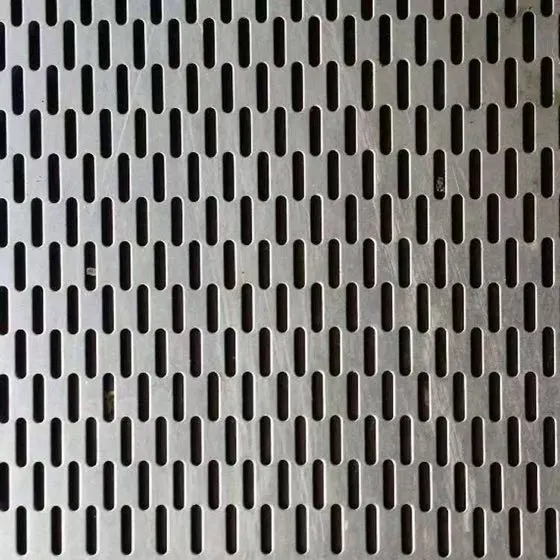
A flat panel full of evenly spaced holes could be wire mesh or it could be perforated metal — and at a glance on a data sheet, it's easy to assume they're interchangeable. They aren't. The two are made by entirely different processes, and that difference shows up directly in strength, hole-shape options and cost per application.
How Each One Is Actually Made
Wire mesh starts as wire, woven or welded into a grid after the fact. Perforated metal starts as a solid sheet, with holes punched, stamped or laser/CNC-cut directly into it. JoyLink's Perforated Metal Mesh is produced by CNC punching, giving precise hole positioning and a flat, smooth panel surface — a different manufacturing logic entirely from weaving or welding wire.
Strength, Hole Shape and Open Area
Because it's cut from a continuous sheet, perforated metal keeps more structural continuity around each opening and supports a far wider range of hole shapes than wire mesh can economically produce. JoyLink's Perforated Metal Mesh is available in round, square, hexagonal, ellipse, rhombus and slotted (long-oval) holes, with an adjustable open area from 10% to 70% — a shape and open-area range wire mesh, built from round wire, can't match. Wire mesh, in turn, is the more practical route to very fine, high mesh-count apertures and flexible rolls that perforated sheet can't reach as economically.
Material Range
Perforated Metal Mesh covers the broadest material range in JoyLink's catalog — carbon steel, stainless steel (304/316), aluminum, copper and brass, titanium and nickel alloys, and galvanized steel sheet. Welded Wire Mesh, by comparison, is supplied in low-carbon steel, stainless steel and galvanized wire — a narrower but still solid range for structural and fencing use.
Which Should You Choose?
For decorative panels, facades, or any application needing a precise, repeatable hole pattern at a larger opening size, perforated metal is usually the better fit. For fine filtration, very small apertures, or flexible roll-form product, wire mesh is the more practical and economical choice — woven for filtration precision, welded for structural rigidity (see our guide to woven vs. welded wire mesh).