
Vibrating Screen Mesh: How to Choose the Right Opening and Wire Diameter
A vibrating screen deck's mesh spec is a three-way tradeoff between throughput, retention and wear life — get the balance wrong and you're replacing screens every few weeks.
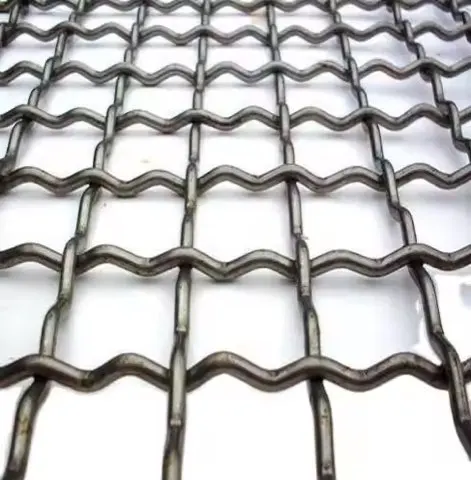
A vibrating screen deck runs continuously, and its mesh spec is a genuine three-way tradeoff — throughput, particle retention and wear life all pull against each other, and optimizing for one usually costs you on another.
Opening Size Sets What Passes Through
A larger opening raises throughput and coarsens the separation cut; a smaller opening does the opposite. This is the first number to fix, based on the target particle size, before wire diameter enters the decision.
Wire Diameter Sets Wear Life, Not Just Strength
A thicker wire survives more abrasion cycles before the opening enlarges past spec from wear — but it also reduces open area and throughput at a given screen size. The right diameter balances expected service life against how much throughput the operation can give up.
Crimping Keeps the Spec Stable Under Vibration
Locked crimp crossings stop the opening size from drifting as the screen runs continuously — an unwelded, uncrimped mesh can widen at the crossings under sustained vibration, quietly changing the cut point over the screen's service life. See our full guide to crimped wire mesh weave patterns for how different crimp styles handle this.
JoyLink's Options for Vibrating Screens
Crimped Wire Mesh is supplied with openings from 2mm to 100mm and wire diameters from 0.8mm to 12.7mm, in full or sectional weave, across low-carbon steel, stainless steel and galvanized wire.