
Wire Mesh for Food Processing and Sanitary Filtration
Food-contact wire mesh has to satisfy two masters at once — the washdown cycle that keeps a line safe also accelerates corrosion on anything less than the right stainless grade.
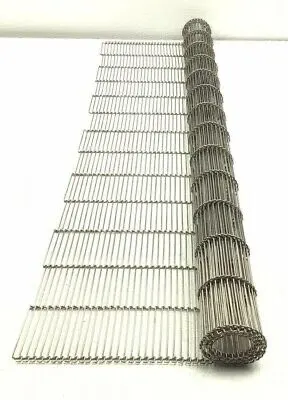
Food-processing mesh lives under near-constant washdown, which is exactly the condition that punishes an undersized corrosion-resistance spec fastest — the same cleaning regime that keeps a line sanitary also accelerates any weakness in the material underneath it.
Why 304 Stainless Is the Food-Industry Default
304's smooth, cleanable surface and general corrosion resistance cover most washdown regimes at a reasonable cost. Lines with higher salt or acid exposure — brine processing, some sauce and beverage lines — are where 316 earns its premium; see our 304 vs. 316 comparison for the specific exposure conditions that justify the upgrade.
Conveyor Belting for Food Lines
JoyLink's Wire Mesh Conveyor Belt line is built for biscuit, chocolate and bread processing, along with cooling and drying lines — food-contact stainless mesh engineered to run continuously through a production line rather than as a static filter.
Filtration in Food and Beverage Processing
Both the Industrial Filter Screen / Cylinder line and Stainless Steel Wire Mesh list food processing among their real applications — covering everything from ingredient screening to in-line liquid filtration.
Sanitary Design Considerations
Smooth welds, rounded edges and construction that avoids crevices where residue can collect are general food-safety engineering principles worth confirming with any supplier — ask specifically how a mesh's edges and joins are finished, not just what grade the wire is.