
Fence Panel Inspection Checklist: What to Check Before It Ships
A factory audit and a pre-shipment inspection answer two different questions. This is what to check on the shipment itself, with the method behind each check, and where the checks stop and a certification would have to start.
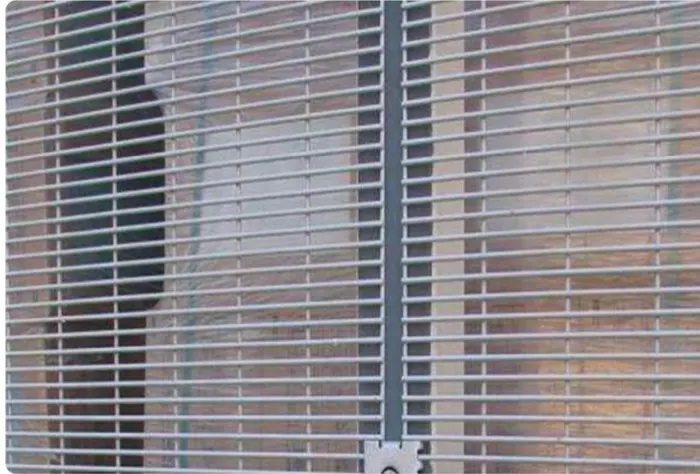
A fence panel line that passes a factory audit can still ship a bad batch, and a batch that passes inspection can still come from a factory you'd never re-order from — a factory audit and a pre-shipment inspection check two different things, and buyers routinely ask for one while needing the other.
The checklist below is what to check on the shipment itself, with the method behind each check named, so a report that just says 'passed' can be read against something specific. It assumes a welded or bent panel system — double-wire, 3D curved, 358 mesh. A few of these checks don't apply to coiled products like barbed or razor wire, covered at the end.
Factory Audit vs. Pre-Shipment Inspection — Not the Same Question
A factory audit assesses the supplier: production lines, documented procedures, staff and equipment. It's commissioned once, or periodically, independent of any specific order, and it says nothing about the batch you're about to receive. A pre-shipment inspection (PSI) assesses this shipment — the fence panels physically on the factory floor or already in the container — checked against your purchase specification before it's sealed.
See our guide to finding a reliable wire mesh manufacturer for the fuller audit-vs-inspection distinction. For a fence panel order specifically, the inspection is the one that matters for the batch you're about to receive, and it needs to happen close to loading — an audit report from months earlier says nothing about this run's welds or coating.
Inspection Checklist at a Glance
Each row below is a check and the method behind it, not a pass/fail judgment — what counts as acceptable is set by your own specification and your inspector's agreed criteria, not by this list.
| What to check | Method |
|---|---|
| Panel dimensions and squareness | Tape measurement of width and height, plus a diagonal measurement in both directions on a sample of panels |
| Weld coverage and strength | Visual and hand-flex check at wire intersections; a lab pull-test on a welded sample to measure weld-failure force |
| Zinc coating thickness | Magnetic (non-destructive) thickness gauge, or destructive strip-and-weigh, referenced against ASTM A641 coating-weight classes |
| Powder coat adhesion | Cross-hatch (cross-cut) tape test graded to ISO 2409 or the equivalent ASTM D3359 scale |
| Powder coat dry film thickness | Coating thickness gauge, referenced against EN 13438 |
| Powder coat impact resistance | Falling-weight impact test to ASTM D2794, where impact resistance is a stated project requirement |
| Visual and finish defects | Visual check for holidays (bare spots), sagging or drips, and scratches; color compared against the specified RAL code |
| Accessories and completeness | Fasteners, clips, brackets, caps and hardware counted against the packing list, not against panel count alone |
| Packing and marking | Checked against the PO's packing spec; wooden pallets checked for a visible IPPC stamp |
| Sample size for the shipment | A statistical sampling framework such as ISO 2859 / ANSI Z1.4, with an agreed sampling level and AQL |
Dimensions, Squareness and Weld Integrity
A panel that measures correctly on both edges can still be out of square if the two diagonal measurements don't match — a fault that shows up as a gap or overlap once panels go up in a running fence line, not on the inspection table. For bent (3D) panels, check rib depth and spacing as well as overall dimensions; a shallow rib reduces the rigidity the bent profile exists to provide.
At every wire intersection on a welded panel, a missed or partial weld — a cold weld — creates a point where the panel can be pried open, or where corrosion starts once the coating is broken at that spot. A hand-flex check at a sample of intersections catches the obvious cases; a lab pull-test on a welded sample measures the force at which the weld itself fails, separately from the wire's own tensile strength.
Coating Checks: Zinc, Powder and Adhesion
Galvanized coating thickness is checked with a magnetic thickness gauge on the finished panel, or destructively by stripping and weighing a sample. ASTM A641 is the published US standard covering zinc-coated carbon steel wire and sets coating-weight classes by wire diameter — ask which class a quote assumes if coating weight matters to your project, since 'galvanized' alone doesn't state a thickness.
Powder coating needs two separate checks, not one. Adhesion is checked with a cross-hatch test — a grid of cuts scored through the coating to the substrate and tape-pulled, graded to ISO 2409 or the equivalent ASTM D3359 scale; coating that lifts along the cut lines fails, regardless of how thick it is. Dry film thickness (DFT) is checked separately with a coating thickness gauge, and EN 13438 is the published European standard for powder coatings on galvanized steel that sets minimum thickness and adhesion criteria together rather than judging thickness alone. Where a panel will be handled or transported roughly, ASTM D2794 (falling-weight impact) is the relevant test — ask for it by name if it applies, since it isn't implied by an adhesion or thickness result.
Visual Defects, Accessories and Packing
Check for holidays (bare spots where powder coating didn't cover), sagging or drips from an uneven cure, and scratches or abrasion on the coated face from handling — the last of these is why the packing method matters as much as the coating process itself. Compare the color against the RAL code specified on the order, not against a sample seen earlier in the project, since coating batches can drift.
Count fasteners, clips, brackets, post caps and tension hardware against the packing list, not against the panel count alone — a shipment can arrive with every panel accounted for and still be short the hardware needed to install them. Verify packing matches what was specified in the purchase order — pallet or bundle method, edge protection on coated panels, moisture protection and legible shipping marks — and check any wooden pallets for a visible IPPC stamp before the container is sealed. See our export packing guide for what that mark should show.
Sampling: How Much of the Shipment to Check
Checking every panel in a large order isn't usually practical, which is why inspection typically samples a defined percentage of the shipment rather than inspecting all of it. ISO 2859, and its US equivalent ANSI/ASQ Z1.4, is the published statistical framework most third-party inspectors use to set a sample size and an acceptable/rejectable defect count for a given lot size and inspection level. Ask which sampling level and AQL (acceptable quality limit) your inspector applies — a passed inspection at a loose sampling level and one at a tight level both come back as 'passed,' but they represent different amounts of the shipment actually examined.
What JoyLink Tests, What's Third-Party, and What We Don't Certify
JoyLink runs tensile strength testing to GB/T 228.1 and salt spray testing to ASTM B117 — 72 hours to red rust for galvanized mesh, 1,000 hours for PVC-coated. Both are cabinet results under controlled conditions, not a prediction of how long a coating lasts on an actual installed fence. Wire diameter is the one measurement checked by a third-party inspector rather than in-house, to ±0.03mm tolerance.
JoyLink does not hold ISO 9001, SGS, CE or UL certification. Full detail on all of this, including what a test method does and doesn't establish, is on our quality and inspection page. None of it substitutes for the panel-level dimensional, weld, coating and packing checks above, which are specific to the batch you're ordering — not to the factory in general.
Where This Checklist Doesn't Apply
Coiled products — barbed wire, razor wire — aren't panels, and several of the checks above don't transfer directly. Squareness and weld coverage aren't relevant to a coil; check core and barb (or blade) wire diameter, coil dimensions and coating instead, using the same coating and sampling methods described above wherever they apply.