
Galvanized vs. Powder-Coated Fence Panels: Why the Real Choice Is Both, Not Either
Powder coating alone doesn't stop steel from rusting — it needs a zinc layer underneath, and whether that zinc survives the weld depends on when it was applied.
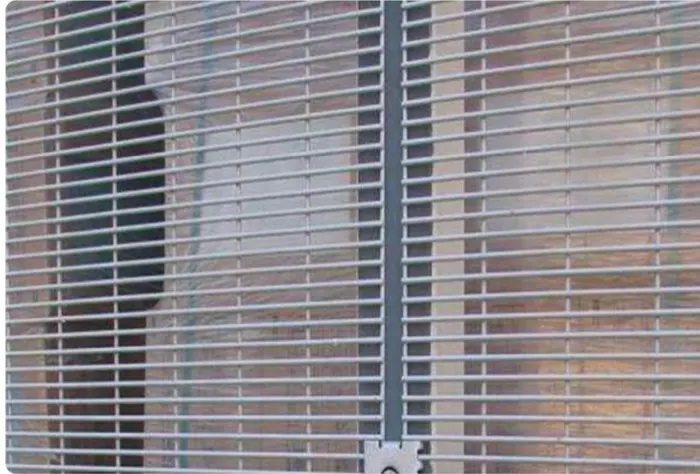
"Galvanized or powder-coated" is usually the wrong framing for a welded fence panel: powder coat is a decorative and secondary barrier layer, not a substitute for the zinc that actually stops the steel from corroding. The question that decides a panel's corrosion performance is when the zinc goes on relative to the weld, and whether a powder top-coat sits over it. That's a different comparison from galvanized vs. PVC-coated mesh — PVC is a standalone barrier coating sometimes used without zinc underneath, while powder coat on a fence panel is almost always paired with galvanizing rather than replacing it. See the PVC comparison for the sacrificial-vs-barrier mechanism; this page is about what happens underneath a colored panel.
GBW vs. GAW: Where the Zinc Sits Relative to the Weld
Two industry terms describe when a welded mesh panel gets its zinc coating. GBW (galvanized before welding) starts with zinc-coated wire that is then welded into a panel. GAW (galvanized after welding) welds bare wire into a panel first and hot-dip galvanizes the finished assembly afterward.
The difference matters at the weld itself. Resistance welding generates enough heat to burn the zinc coating off at and around each intersection in a GBW panel, leaving the weld points less protected than the wire runs between them unless they're spot-treated afterward. A GAW panel has no such gap — the whole welded assembly, weld points included, goes through the zinc bath together, so the intersections carry the same coating as the rest of the wire.
For a fence panel, where welds sit outdoors and take the brunt of handling and installation damage, GAW is the more corrosion-consistent process. GBW isn't inferior everywhere — it's the standard sequence for pre-galvanized wire mesh rolls that are never re-dipped as a finished panel. But for a rigid welded fence panel meant to sit outdoors for years, ask which process a given line uses rather than assuming "galvanized" alone answers the question — it's a property of the manufacturing sequence, not something a coating-weight number by itself tells you.
Separately from when the zinc is applied, the zinc coating weight on the wire itself is graded by a public standard: ASTM A641 defines coating-weight classes for zinc-coated carbon steel wire (for example, Class 1 carries less zinc than Class 3). That classification describes the wire before it's ever formed into a panel — a mill certificate citing an ASTM A641 class is telling you about the wire, not about whether the finished panel went through GBW or GAW.
Why the Fence Industry Runs a Two-Layer System
Almost no welded-mesh fence panel ships with powder coat as the only corrosion protection over bare steel. The mainstream construction is galvanize-then-powder-coat: a zinc layer underneath for sacrificial corrosion protection, with a powder top-coat over it for color, UV resistance and an added moisture barrier. Strip out the zinc and rely on powder coat alone, and the panel is left with only barrier protection — the same failure mode as PVC-coated mesh, but on a coating not generally built to PVC's thickness.
This double-layer combination is standardized on its own terms rather than being an informal pairing: EN 13438 sets requirements and test methods specifically for powder or liquid organic coatings applied over hot-dip galvanized or sherardized steel construction products, which is the recognized way of specifying this exact two-layer system in a purchase order.
JoyLink's own catalog reflects the pairing rather than treating powder coat as a freestanding option. Both the 358 anti-climb fence panel and the double wire fence panel are offered hot-dip galvanized, or hot-dip galvanized with a powder-coated (or PVC-coated) finish over that base — not powder coat applied directly to bare steel.
How a Powder-Coated Panel Actually Fails
A powder coating is a barrier, and a barrier only protects where it's unbroken. A scratch, a drilled hole, or a crushed section from transport or installation opens a path for moisture to reach the steel underneath. What happens next depends entirely on whether there's zinc under the powder coat.
On a galvanize-then-powder-coat panel, the zinc at the scratch keeps corroding sacrificially in the steel's place — the same mechanism described in the galvanized vs. PVC comparison — so the scratch stays a cosmetic chip rather than a spreading rust line.
On a panel where powder coat sits directly on bare steel, there's no sacrificial layer at the break. Moisture reaches unprotected steel, and rust creeps outward from the scratch under the coating film, eventually lifting the paint around the damaged area — a failure mode buyers sometimes mistake for a coating defect when it's really a missing zinc layer. A scratched or chipped powder-coated panel is worth inspecting for what's underneath the chip, not just touching up with matching paint.
What a Buyer Can Ask a Supplier to Test
Coating adhesion and impact resistance have standard, publicly available test methods a buyer can name in an inspection checklist. ISO 2409 (cross-cut/cross-hatch adhesion test) and ASTM D3359 (tape adhesion test) both check whether the coating film bonds to the substrate rather than flaking off along a blade cut. ASTM D2794 (falling-weight impact test) checks whether the coating cracks or delaminates under a sudden impact rather than a slow scratch.
These are industry test methods you can specify in a purchase order and ask a supplier or an independent inspector to run on a sample batch. They are not among the tests JoyLink currently publishes results for — JoyLink's published tests are tensile strength to GB/T 228.1, salt spray to ASTM B117, and third-party wire diameter inspection (see the quality page) — so treat coating adhesion and impact testing as something to arrange for a specific order rather than assume is already covered.
Naming a test standard in a PO is also a separate question from certification. JoyLink does not hold ISO 9001, SGS, CE or UL certification, and specifying ISO 2409 or ASTM D3359 in your inspection criteria doesn't require a supplier to hold any of those — it specifies a method, not an accreditation.
The RAL Color Is a Field You Have to Specify
A powder-coated finish doesn't come in one default color — the buyer names the RAL code in the order, not the factory. JoyLink's 3D curved fence panel, for example, lists RAL 6005 (green) and RAL 7016 (gray) as standard options with custom RAL matching on request. Treat that as representative of how powder-coated fence panels get ordered generally: as a RAL number written into the spec, not a color chosen after the fact from a sample. If a purchase order doesn't name a RAL code, expect the supplier to ask for one before production starts, not to guess.
Side by Side
Every row compares the same base material — welded carbon-steel mesh — under two finish options, not two different steels.
| Galvanized only (no top-coat) | Galvanized + powder-coated | |
|---|---|---|
| Corrosion mechanism | Zinc corrodes sacrificially in the steel's place | Same sacrificial zinc layer underneath, plus a barrier top-coat over it |
| At a scratch or cut edge | Zinc keeps protecting the exposed steel | Zinc still protects the exposed steel under the chip; mainly the color and gloss are compromised |
| Color | Metallic zinc finish only — matte for hot-dip, brighter for electro-galvanized | Any RAL code the buyer specifies (e.g. RAL 6005 green, RAL 7016 gray, custom on request) |
| Weld-zone question to ask | Was the wire galvanized before welding (GBW) or the finished panel galvanized after welding (GAW)? | Same GBW/GAW question applies to the galvanized layer sitting under the powder coat |
| Relevant public test standards | ASTM A641 (wire zinc coating class) | ASTM A641 for the zinc base, EN 13438 for the powder-over-galvanized system, ISO 2409 / ASTM D3359 for adhesion, ASTM D2794 for impact |
| Offered on | 358 anti-climb fence and double wire fence panels, both as a hot-dip galvanized base finish | Both product lines also offer galvanized + powder-coated as an upgrade over the same base |
Where This Comparison Doesn't Apply
This page compares two finishes on the same welded carbon-steel panel. It doesn't apply to stainless steel fencing, where corrosion resistance comes from the alloy rather than a coating, or to PVC-coated chain link, which is compared against plain galvanized — not powder coat — in a separate article because it protects by a different mechanism. It also doesn't establish how many years a specific coating lasts on a given site; that depends on the environment, handling and maintenance, the same caveat that applies to the salt spray hours published on the quality page.
If a specification calls for a documented adhesion or impact test result, or a coating system audited to a named standard, raise it in the RFQ before ordering — it's a per-order confirmation, not something a catalog comparison can settle on its own.