
Galvanized vs. PVC-Coated Wire Mesh Fence: Which Coating to Specify
Zinc and PVC protect steel in two different ways — one sacrificially, one as a barrier — and that difference decides which belongs on your fence.
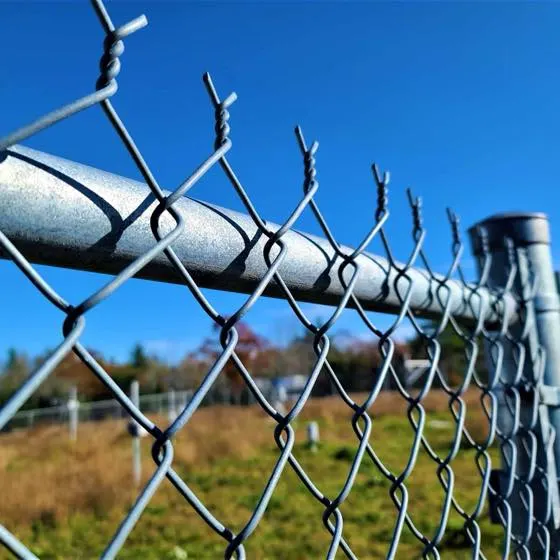
Galvanized and PVC-coated mesh are usually presented as a price choice. They are really a mechanism choice: zinc corrodes in the steel's place, while PVC keeps corrosive water off the steel entirely. Each fails in a different way, and that is what should drive the specification.
Sacrificial vs. Barrier Protection
Zinc coats the steel and corrodes preferentially in its place — a sacrificial layer that keeps protecting the steel underneath even where the coating gets scratched. A polymer coating like PVC works the opposite way: it protects by keeping moisture off the steel, which means it protects only where it is intact. A deep enough cut, crush or drilled hole in PVC exposes bare steel that nothing is defending.
Neither mechanism is better in the abstract. Galvanizing tolerates handling damage; PVC tolerates a wetter, more chemically loaded atmosphere for as long as it stays unbroken.
What the Salt Spray Hours Do and Do Not Tell You
JoyLink runs salt spray testing to ASTM B117, and the results are 72 hours to red rust for galvanized mesh and 1,000 hours for PVC-coated mesh. The gap between those two numbers is real and it is the clearest published evidence of the barrier effect.
It is not a service life. Those are results in a cabinet running a continuous salt fog — coastal air, installation damage, cut edges and maintenance all change the outcome, and the cabinet reproduces none of them. Use the hours to compare the two coatings against each other under one controlled condition, not to predict years in the ground. The full statement of what the test does and does not establish is on the quality page.
Side by Side
Every row restates a fact published elsewhere on this site rather than adding a new claim.
| Galvanized | PVC-coated | |
|---|---|---|
| How it protects | Zinc corrodes sacrificially in the steel's place | Polymer barrier keeps moisture off the steel |
| When the coating is damaged | Still protects the exposed steel | Exposed steel is unprotected at the break |
| ASTM B117 salt spray result | 72 hours to red rust | 1,000 hours |
| Coating specified as | Hot-dip 40–300 g/m² zinc weight on Welded Wire Mesh; hot-dip is thicker and matte, electro-galvanized thinner, smoother and more economical | PVC applied over the base wire |
| Appearance | Metallic — matte for hot-dip, shinier for electro-galvanized | Green, black or white on PVC-coated chain link |
| End of life | Zinc is generally accommodated in standard steel recycling streams | Recyclers must strip or separate the polymer before the steel can go back into the melt |
| Specify it when | The environment is outdoor or humid but not chemically aggressive, and the mesh will be handled, cut or installed roughly | A specific colour matters, or the atmosphere is wet enough that a barrier earns its cost and the mesh will not be cut or crushed in service |
Where Neither Is the Answer
Both coatings sit on carbon steel, so both are the wrong starting point where the steel itself is the problem. Chlorides, industrial chemicals, or a hygienic or food-contact requirement are the point to step up to stainless rather than to a heavier coating — a coating failure in those environments attacks the substrate immediately.
This page compares coatings on the same base material. It does not establish how long either lasts in a particular installation; that depends on the site, and confirming it is part of specifying the job rather than something a comparison table can answer.