
How to Shortlist Wire Mesh Fence Suppliers: A Sourcing Method, Not a Recommendation
This is a sourcing method, not a case for any particular supplier: where to start looking, and how much of its own specification a supplier discloses publicly is a filtering signal you can check before you ever make contact.
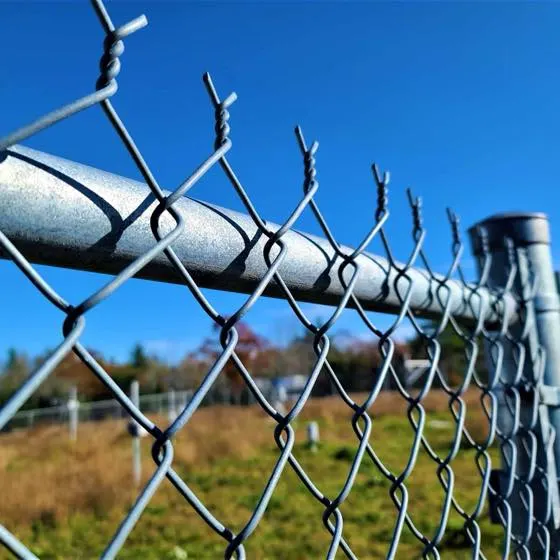
Finding a wire mesh fence supplier and shortlisting one are two different tasks. Finding candidates is a channel problem — where fence panel manufacturers actually show up. Shortlisting is a filtering problem — which of those candidates are worth a follow-up call, before you've spent any time on outreach or sample requests. This is a sourcing method for both steps, not a case for any particular supplier, including the one whose site this article is published on.
Project buying and distribution buying filter differently even from the same candidate list, because they're optimizing for different things — a project needs one batch that matches a drawing; a distribution buyer needs years of consistent reorders. Both are covered separately below.
How Can I Find Wire Mesh Fencing Suppliers for a Project?
Four channel types cover most of where fence panel manufacturers are findable, and each answers a different verification question rather than a better or worse one.
B2B sourcing platforms (Alibaba, Made-in-China, Global Sources and similar) give the broadest reach and the fastest way to generate a long candidate list. Listings are self-reported, and a platform verification badge describes what the platform checked — usually business registration, sometimes a facility visit — not your specific specification. Treat a platform search as a way to generate candidates, not to qualify them.
Industry directories and trade associations produce narrower, sometimes membership-gated lists, but the rigor behind that membership varies by directory — check what a listing actually required before treating membership itself as a quality signal.
Trade shows let you see product and, often, samples in person and talk to technical staff directly, which a platform listing can't replicate. The tradeoff is that shows are periodic, geographically fixed, and costlier to attend than a platform search.
Manufacturing clusters matter specifically for wire mesh: production in China is geographically concentrated, and Anping County in Hebei is a well-documented cluster for wire mesh and fence panel manufacturing. Sourcing within a cluster lets you compare several factories in one trip and ask about local subcontracting relationships — for processes like galvanizing or powder coating that a given factory may not run in-house — as a further point to check.
None of these four channels replaces vetting the specific supplier you end up talking to. They only change how many candidates you find and how quickly you find them.
Which Suppliers Provide Clear Fence Panel Specifications?
Once you have a candidate list, specification disclosure level is a filtering signal you can check before you've made contact with anyone. A supplier who states aperture, wire diameter, post profile, surface treatment system and color standard on a public page is giving you something to check against a drawing or a competing quote immediately. A supplier whose page shows only finished-product photography and language like "high quality" or "premium" gives you nothing to verify yet — not necessarily because the product is worse, but because there's nothing on the page to hold them to.
The contrast is concrete, not stylistic: "high-quality fence panels for every project" is not a specification. "Double-wire fence panel, 6/5/6 to 8/6/8mm wire diameter, 50×200mm mesh, hot-dip galvanized or galvanized plus powder coat" is — it names fields a drawing or a competing quote can actually be checked against.
| What the page discloses | What that lets you check before contacting the supplier |
|---|---|
| Aperture / mesh opening as a dimension (e.g. 50×200mm) rather than "standard mesh" | Whether the panel geometry matches your drawing or project spec at all, before a conversation starts |
| Wire diameter — a single figure for flat panels, a three-part figure (e.g. 6/5/6) for double-wire construction | Whether the supplier understands its own product's construction well enough to state it correctly — a single number for a double-wire panel is a sign the page was written without checking |
| Post profile and wall thickness (round, square or rectangular; outer dimension; wall thickness in mm) | Whether the post system is compatible with your installation method, and whether it's a real spec or a placeholder |
| Surface treatment system named specifically (hot-dip galvanized, galvanized + powder coat, galvanized + PVC coat) rather than just "coated" | Which corrosion mechanism you're actually buying, and whether it matches your environment |
| Color standard given as a RAL code rather than a color name | Whether the finish can be matched and verified against an industry-standard reference instead of an approximate description |
| What the supplier explicitly does not claim — certifications not held, data not published, fields that vary per order | Whether the rest of the page's claims are stated carefully, since a supplier willing to name a limit is giving you something to check the rest of the page against |
How Can I Shortlist Fence Suppliers for Distribution?
Project buying and distribution buying apply different criteria to the same candidate list, because they're solving different problems. Project buying is optimizing for one batch that matches one drawing and ships once. Distribution buying is optimizing for years of reorders across a catalog, where the supplier becomes a standing part of your own supply chain rather than a one-time vendor.
| Selection criterion | Project procurement priority | Distribution procurement priority |
|---|---|---|
| Specification match | Exact match to this project's drawing for this one order | Coverage across a catalog width — one supplier for multiple SKUs rather than a single product |
| Delivery | A single batch delivered consistently against one committed timeline | Reorder consistency over years — whether the same spec comes back identical each time (see our guide to price validity and repeat orders) |
| Customization | Match to this project's exact geometry, even if non-standard | Stable standard SKUs the supplier can reproduce reliably, since deep customization complicates every reorder |
| Branding | Rarely relevant for a one-off project installation | Private-label or OEM packaging capability, since resale usually needs the distributor's own branding |
| Documentation | Project-specific mill certificates and inspection reports for this shipment | A supplier who can produce the same documentation format reliably, order after order |
Clear Specification Disclosure Is Not Proof of Quality
A supplier that discloses aperture, wire diameter, post profile, coating system and color on a public page has made verification cheaper — it has not established that the product meets spec. Disclosure and compliance are different claims, and conflating them is a common shortlisting mistake. A well-documented spec page still needs the same checks a vaguely-documented one does: a factory audit or a per-order inspection you commission independently (see our guide to finding a reliable manufacturer for the audit-vs-inspection distinction), a request for mill certificates or test results tied to the standard actually named, and — for anything security-rated or code-relevant — a check against your own project's risk assessment rather than the supplier's marketing language.
A supplier being explicit about what it doesn't hold or doesn't publish is itself part of this signal, for the same reason a vague claim is a warning sign: it tells you what still needs independent verification, rather than leaving you to discover it after the order ships. JoyLink's own site is one example of what that looks like in practice — it publishes aperture, wire diameter (with a stated third-party tolerance), named surface treatment systems and RAL color codes on its product and quality pages, and states plainly that it does not hold ISO 9001, SGS, CE or UL certification. That's cited here as an example of a disclosure checklist applied to a real page, not a recommendation — the method above works the same way against any supplier's page you're evaluating.
Where This Method Doesn't Apply
This is a first-round filter, not a complete vetting process — it narrows a long candidate list to a shorter one worth contacting, using only what's already public. It doesn't replace the checks in our guide to choosing a fence panel supplier once you're actually talking to a shortlisted candidate, and it isn't a substitute for a project-specific engineering review on a highly customized or security-rated spec, where published catalog fields — however clearly stated — don't cover a geometry that hasn't been built yet.