
Fence Posts, Clamps and Panel Accessories: The System Behind the Panel
A mesh panel is only half a fence — the post profile, the panel-to-post connection, the fasteners, the top extension and the foundation decide whether it performs as a system.
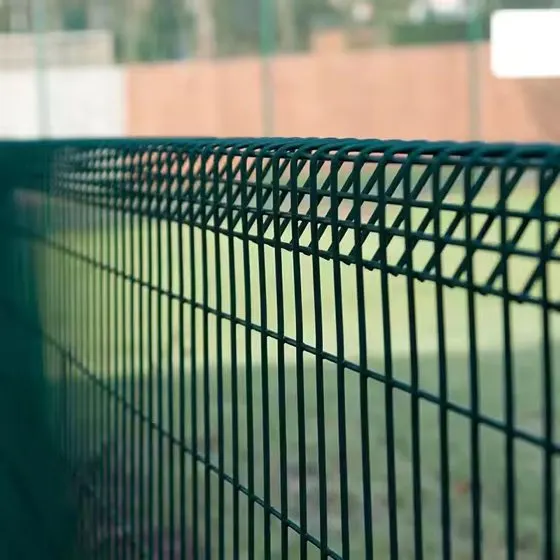
Specifying a fence panel and stopping there is a common gap in an RFQ. The panel is the visible part, but a perimeter fence is a system of five separate decisions — post profile, how the panel attaches to the post, the fasteners, whether the top gets an extension, and how the post is founded in the ground — and each one is a real line item that changes how the fence ships and how long it takes to install, even where none of it shows up as a number on a product spec sheet.
Post Profiles: Square, Round or Peach-Shaped
JoyLink's fencing line uses three post cross-sections, and which one applies depends on the panel line. The double wire fence panel pairs with a square post (40×40mm up to 80×80mm box section, 1.5–2.0mm wall) or a round post. The 3D curved fence panel offers a wider range — round posts at 48/60mm, square posts at 50/60/80mm, and rectangular posts from 40×60mm up to 80×100mm at 1.5–2.0mm wall — plus a square post with a rain cap and mounting accessories for a finished top.
The cross-section isn't only cosmetic. A round post sheds water differently than a square one, and, as the next section covers, the post's shape decides how the mesh actually attaches to it.
Post Options at a Glance
Dimensions below are as published for each product line; confirm the current figure against the specific order rather than assuming one line's post applies to another.
| Post type | Panel-to-post connection | Used with |
|---|---|---|
| Peach-shaped post | Mesh fits directly onto the profiled post — no screws or bolts at the joint | 3D curved fence panel |
| Round-pipe post | Mesh and column joined by separate fastening hardware (brackets/clips) | 3D curved fence panel (alternative); double wire fence panel |
| Square post (box section) | Bolted or clipped connection; wall 1.5–2.0mm on both product lines | Double wire fence panel (40×40–80×80mm); 3D curved fence panel (50/60/80mm) |
| Rectangular post | Bolted or clipped connection | 3D curved fence panel (40×60mm–80×100mm, wall 1.5–2.0mm) |
Peach-Post vs. Round-Pipe: Two Different Ways a Panel Attaches
JoyLink's 3D curved fence panel documents a real difference in how the panel connects to its post depending on the post's shape. A peach-shaped post is profiled to accept the curved mesh panel directly, with no screws or bolts needed between mesh and column. A round-pipe post has no matching profile, so the mesh and column are joined using other fastening methods — brackets or clips added as separate hardware.
That's a genuine trade-off, not a marketing distinction. A peach-post connection removes a fastener from the parts list at every post along the run, while a round-pipe post keeps the fastener but is a simpler, more widely available post shape to source or replace later. Which one is preferable depends on what a project weighs more heavily — fewer loose parts to install and keep in inventory, or a simpler, more standard post profile.
Fasteners and Tamper Resistance
Where a panel is bolted or clipped to its post rather than profile-fitted, the fastener itself is a security decision, not just a hardware choice — a standard bolt head that any wrench can remove undermines a fence's anti-climb intent no matter how rigid the panel is. Security or tamper-resistant fastener hardware (one-way heads, anti-theft screw types) is a common addition on higher-security perimeter jobs specifically because the panel-to-post joint, not the mesh itself, is the weakest point an intruder targets first.
Whether a specific tamper-resistant fastener type ships as standard or as an option on a given JoyLink product line is a per-order confirmation, not something covered in the published product data — raise it in the RFQ if a project's threat model calls for it.
Top Extensions: Razor Wire Arms and Barbed Wire
A fence's height is one deterrent; what sits on top of it is another. The 358 anti-climb fence panel is documented as accepting a razor wire coil or barbed wire fitted to the top for extra deterrence on higher-security sites. Razor barbed wire itself is supplied in concertina (coiled drum), flat-wrap, and cross-pattern configurations — concertina is built for rapid deployment along a long perimeter run, while flat-wrap mounts directly along an existing fence line or wall, which is the more common choice for topping an already-installed panel fence rather than building a new perimeter from the coil alone.
Plain barbed wire is the lighter-weight, lower-cost version of the same idea. JoyLink's barbed wire line is documented as flexible to install and more cost-effective than an electric fence or concrete wall, which is why it shows up as a top extension on lower-tier perimeters about as often as it does as a standalone fence.
Foundations: Embedded, Flange-Plate or Concrete
How a post is founded is a site-conditions decision more than a product one. A post embedded directly into a poured concrete footing is the most common approach for a permanent perimeter and gives the most resistance to being pushed or pulled over. A flange (base) plate bolted to an existing concrete slab is the usual choice where the fence sits on a finished surface that can't be broken open for a footing, or where a section may need to be removed and relocated later.
Neither foundation method is documented here as a standard JoyLink offering with a fixed spec — the right one depends on the site's existing surface and soil, and is normally confirmed with the installer or a civil/structural reference for the project rather than chosen from a fence catalog.
Why Accessory Choice Isn't Free — Even Without a Number Attached
A post profile that removes a fastening step, like the peach-post connection, changes two things a spec sheet doesn't show: how much of a container's shipped volume is panel versus loose hardware, and how many install steps a crew repeats at every post along the run. Neither of those is a number published here, because both depend on the specific project's post spacing, panel count and packing configuration rather than on the product line alone. Treat accessory selection as a real cost and schedule variable to raise during the RFQ, not an afterthought to settle after the panel spec is locked in.
Where to Confirm the Details
None of the dimensions above substitute for a project drawing. Post wall thickness, mounting accessory sets, fastener types and foundation methods are all things to confirm against the specific product line and site conditions before ordering — the same way panel aperture and wire diameter are confirmed per project on JoyLink's 358 fence line rather than quoted from a catalog figure.