
Perimeter Fencing for Warehouses and Industrial Sites: Matching the Fence to the Threat
Warehouses, logistics parks, industrial plants and parking lots don't share one threat profile, so there isn't one "best" perimeter fence across them — the fence should follow what the site is actually defending against.
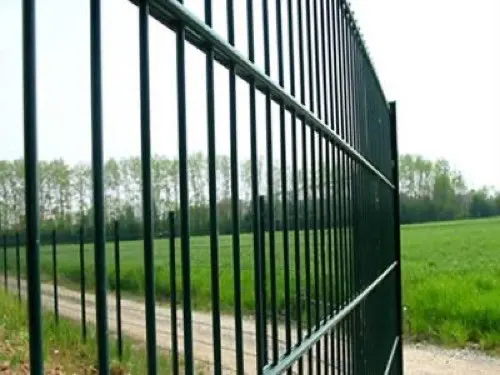
There's no single fence that's correct for every commercial or industrial site. A warehouse yard, a logistics park, a production plant and a parking lot are exposed to different threat modes, and the fence that answers one doesn't automatically answer the others. This is a selection-by-scenario guide, not a security rating: it maps what each site type is typically defending against to the structural feature that answers it, and it deliberately stops short of grading which scenario is "more secure" than another — that judgment depends on a site's own risk assessment, which a product comparison can't perform.
Start With the Threat Mode, Not the Product Name
"Best fence for a warehouse" isn't answerable without knowing what the fence has to stop. A perimeter that keeps casual foot traffic out of a parking lot doesn't need the same aperture and rigidity as one meant to resist tool-based cutting at a production plant, and neither needs to solve a problem it doesn't have — like vehicle intrusion near a loading dock. Naming the threat mode first — climbing, cutting, casual walk-through, or vehicle impact — narrows the product choice faster than starting from a spec sheet.
Site Types and What They're Usually Defending Against
The rows below are ordered by site type as listed, not by any security ranking — see the note after the table.
| Site type | Typical threat mode | Structural feature it calls for |
|---|---|---|
| Warehouse / logistics yard perimeter | Opportunistic climbing and tool-based cutting at ground level, often with no on-site security overnight | A rigid, small-aperture panel that resists climbing and cutting without depending on constant patrol — double wire fence panels list industrial parks, warehouses and logistics bases directly among their documented applications |
| Industrial plant / factory perimeter | Trespass, combined with a need for the perimeter itself not to create blind spots for CCTV coverage | An open-mesh panel rather than a solid wall or dense privacy screen, so the fence line stays visible to cameras instead of blocking its own sightline |
| Loading dock / vehicle-adjacent perimeter | Vehicle impact or ramming near gates, docks or driveways | A vehicle-rated barrier system — bollards, crash-rated gates or similar — which is a different product category from a wire mesh fence panel; no panel on its own substitutes for one here |
| Parking lot / low-sensitivity boundary | Casual walk-through and line-marking rather than a determined intrusion attempt | A lighter, more economical enclosure such as chain link or a 3D curved panel is usually enough, since the goal is defining a boundary rather than resisting a forced attempt to cross it |
This Table Ranks Nothing
The four rows above are not ordered by security level, and reading them top-to-bottom as "most secure to least secure" would be a misuse of the table. Each row only pairs a threat mode with the structural feature that answers it — it says nothing about how likely that threat actually is at a specific site, what security tier a customer's insurer or regulator requires, or how the four scenarios compare on any single scale. Assigning a security rating to a site is a risk assessment the customer makes, often with a security consultant, insurer or relevant authority; a product comparison table isn't a substitute for that assessment and isn't attempting to be one.
Where JoyLink's Fencing Line Fits Each Scenario
Double wire fence panels list industrial parks, warehouses and logistics bases directly among their documented applications, alongside commercial and public grounds. Their double-horizontal, single-vertical welded construction is built for rigidity and a tight, anti-climb aperture rather than for flexibility, which matches the ground-level cutting and climbing threat described above.
Chain link mesh is documented as suitable for commercial and industrial site security as well as residential fencing, and its woven construction can be cut and assembled on site to fit irregular terrain — useful where a parking lot or a lower-sensitivity boundary needs to follow an uneven property line rather than a straight run.
The 358 anti-climb fence panel is built for a narrower, higher-security tier than a typical warehouse. Its documented applications are prisons, military bases, substations and airports, its panel height runs 2.0–5.2m, and it can take a razor wire or barbed wire top for extra deterrence. It's a reasonable option for a high-value industrial site carrying its own elevated risk assessment — not a default for a standard warehouse yard.
The 3D curved fence panel's documented applications include factories and municipal road perimeters, and it's offered in standard RAL colors (RAL 6005 green, RAL 7016 gray, custom on request) — a lighter-weight, more finished-looking option where the site prioritizes appearance and boundary definition over resisting a determined intrusion attempt.
Where This Guide Doesn't Apply
Vehicle-rated perimeter protection is out of scope here and out of scope for JoyLink's fencing line as documented — none of the seven fencing products described in this guide carry a vehicle-impact rating, so a site whose primary risk is a vehicle breach needs a specialist barrier product evaluated on its own crash-test rating, not a wire mesh panel chosen from this comparison. Livestock and farm boundary fencing (field fence) is also out of scope; it solves a containment problem, not a security-perimeter one, even where it shares similar wire and coating options with the products above. And nothing on this page states or implies a security certification or rating for any product — where a project requires a certified security fence rating, that's a specification to confirm directly before ordering, not something this guide establishes.