
How to Assess a Supplier Quality Claim: Assertion vs. Evidence
A tensile figure, a certificate name, and a passed inspection are three different kinds of claim with three different amounts of proof behind them — and a claim that names none of the specifics behind it isn't evidence at all.
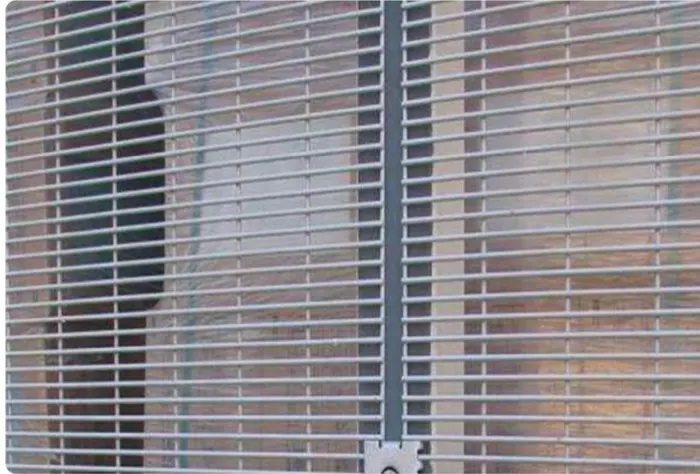
Every fence panel quote arrives with some version of a quality claim attached, and the claims vary enormously in how much they actually let you check. This is about how to weigh a claim once it's made — what separates an assertion from evidence, what each level of evidence does and doesn't prove, and specifically how to read a certification claim. It doesn't redefine the test methods themselves (see our glossary of wire mesh quality control terms) and it doesn't cover what to check on a physical shipment (see our fence panel inspection checklist) — this is about the evidentiary weight of the claim itself, before you get to either of those.
What Evidence Actually Supports a Supplier Quality Claim
The evidence behind a supplier quality claim is whatever a party outside the supplier could independently check — a named test standard with a dated report, a certificate number an issuing body will confirm, or an inspection record tied to a specific shipment — and a claim that offers none of those is an assertion, not evidence, no matter how confidently it's worded.
Sentences like 'we have strict quality control' or 'premium quality guaranteed' describe nothing checkable. A claim becomes evidence once it names what was tested or audited, by what method or standard, on what date, and by whom — in a form you could ask to see or verify with someone other than the supplier. The distinction isn't about tone or confidence; it's about whether there's a specific, external thing to check the claim against.
The Evidence Hierarchy: Four Levels, Four Different Things Each One Proves
Quality evidence in wire mesh procurement generally comes in four levels, and each one answers a different question. Confusing what one level proves for what another proves is the most common way a buyer over-trusts a claim.
In-house self-inspection is the factory checking its own output against its own stated method. It proves a repeatable process exists — worth asking who performs it (dedicated QC staff versus a production operator checking their own work) and whether records are kept and traceable to a specific batch. It doesn't prove independence: the party making the product and the party grading it are the same, and without records you can see, it isn't verifiable by you at all.
A third-party single-item test sends one sample to an outside lab for one specific measurement — a tensile pull, a salt-spray exposure, a coating adhesion test — and returns a dated report naming the standard and the result. It proves that one sample, on one date, met the stated result under a named method. It doesn't prove the rest of the shipment matches that sample, and it says nothing about attributes the test didn't cover.
A third-party shipment inspection (a pre-shipment inspection, or PSI) samples the actual goods on the floor or in the container against a statistical sampling standard such as ISO 2859 or its US equivalent, ANSI/ASQ Z1.4, at an agreed inspection level and acceptable quality limit (AQL). It proves that the sampled portion of this specific shipment met the agreed criteria. It doesn't prove zero defects across the whole shipment — sampling accepts a defined amount of risk by design — and it says nothing about a shipment produced after the inspection date.
A system or product certification — ISO 9001 for a management system, or a scheme like CE or UL for a specific product — is issued by an accredited body against a defined standard, usually on a renewal cycle, with a certificate number, a stated scope and validity dates. It proves that the named system is documented and periodically audited, or that a specific, named product or facility meets a defined scheme as scoped. It doesn't prove every unit shipped is defect-free, and it says nothing about products or facilities outside what the certificate names.
| Evidence level | What it proves | What it doesn't prove |
|---|---|---|
| In-house self-inspection | A repeatable check exists, run to a stated method | Independence from production, or anything you can't see a record of |
| Third-party single-item test | One sample, on one date, met a stated result under a named standard | That the rest of the shipment matches, or that untested attributes are compliant |
| Third-party shipment inspection (PSI) | A statistically sampled portion of this shipment met the agreed criteria | Zero defects in the whole shipment, or that a later shipment will match |
| System or product certification | A documented system is audited on a cycle, or a named product/facility meets a scoped scheme | That every unit shipped is defect-free, or anything outside the certificate's stated scope |
Why an Unverifiable Certification Claim Is Worth Nothing
Not holding a certification is a checkable fact a supplier can state plainly, and a buyer can rely on that statement as information. Claiming to hold one without a certificate number, the accredited issuing body's name, the scope it covers, and its current validity dates is not — without those four details there is nothing external for you to verify the claim against, which makes it functionally equivalent to not having said anything at all.
Each of those four details does real work. The certificate number and issuing body's name are what let you confirm with someone other than the supplier that the certificate exists and hasn't been revoked. The scope matters because a certification is commonly held for one product line or one facility and not another — a certificate that doesn't name your product or your supplier's specific site tells you nothing about either. The validity dates matter because certifications lapse and are re-audited on a cycle; a certificate that expired two years ago is a historical fact, not a current one.
JoyLink's own quality and inspection page is a useful illustration of what a checkable claim looks like, in both directions. It states plainly that JoyLink does not hold ISO 9001, SGS, CE or UL certification — a directly checkable negative — while separately naming exactly which tests it runs itself, tensile strength testing to GB/T 228.1 and salt spray testing to ASTM B117, and which single measurement, wire diameter to a ±0.03mm tolerance, is checked by an outside inspection party rather than in-house. A buyer reading that page knows precisely what is and isn't being claimed, without needing to take anything on faith. That says nothing about whether JoyLink's own testing meets any given buyer's specification, and it isn't offered here as a model of good practice so much as a concrete example of the difference this section is about — a verifiable absence of a certification versus an unverifiable claim of one.
The same logic applies below the level of certifications, to any specific claim. 'We passed the test' without naming the standard, the date, or the sample it covered has the same evidentiary weight as an unverifiable certification claim — which is to say, none.
Common Claims, the Evidence to Request, and Its Limits
The same claim-versus-evidence gap shows up in smaller, more specific statements than a certification. The table below maps a few claims buyers hear often to the evidence that would actually back them up, and what that evidence still wouldn't tell you even once you have it.
| Claim you hear | Evidence to request | What that evidence doesn't prove |
|---|---|---|
| "We do strict quality control." | The specific standard or method used, who performs the check, and a dated record tied to a batch number | Independence from production, or that the criteria applied match what you'd consider strict |
| "We passed a salt-spray / tensile / coating test." | The lab report naming the standard tested to (e.g. ASTM B117, GB/T 228.1), the sample it covered, and the numeric result | That every unit in the shipment matches the tested sample, or that a cabinet result predicts field service life |
| "This shipment was inspected." | The PSI report: sampling standard and level used (e.g. ISO 2859 / ANSI Z1.4), the AQL applied, and which checks were run | Zero defects across the shipment — sampling accepts a defined risk by design — or that a later production run will match |
| "We are ISO 9001 / CE / UL / SGS certified." | Certificate number, the accredited issuing body's name, the scope (products or facilities covered), and current validity dates | That every unit shipped is defect-free, or anything about products or sites outside the certificate's named scope |
What This Means for a Purchase Order
Match the evidence you request to the decision you're actually making. Qualifying a new supplier before committing is closer to an audit or system-level question; making sure the goods in front of you match your drawing is a per-order inspection question. See our guide to finding a reliable wire mesh manufacturer for that audit-versus-inspection distinction in more detail, and our fence panel inspection checklist for what a shipment inspection covers on a welded or bent panel specifically.
Combining a supplier's own in-house inspection with a shipment inspection you commission independently is a common and often sufficient baseline for a standard commercial order. Whether you also need a system certification on top of that depends on what your own customer, project specification or local code requires — that's a requirement to check on your side of the transaction, not something a supplier's claim can settle for you either way. If test terminology itself is unfamiliar, our glossary of wire mesh quality control terms covers what each method actually measures, and our guide to video factory visits covers a separate, earlier question — verifying the supplier and the general product before you get as far as a specific quality claim.