
Video Factory Visits for Fence Panels: What to Check, What It Can't Prove
A live video call can rule out a shell company and show whether the equipment for your panel type actually exists. It can't confirm the batch you receive later, and it isn't a substitute for an inspection you commission yourself.
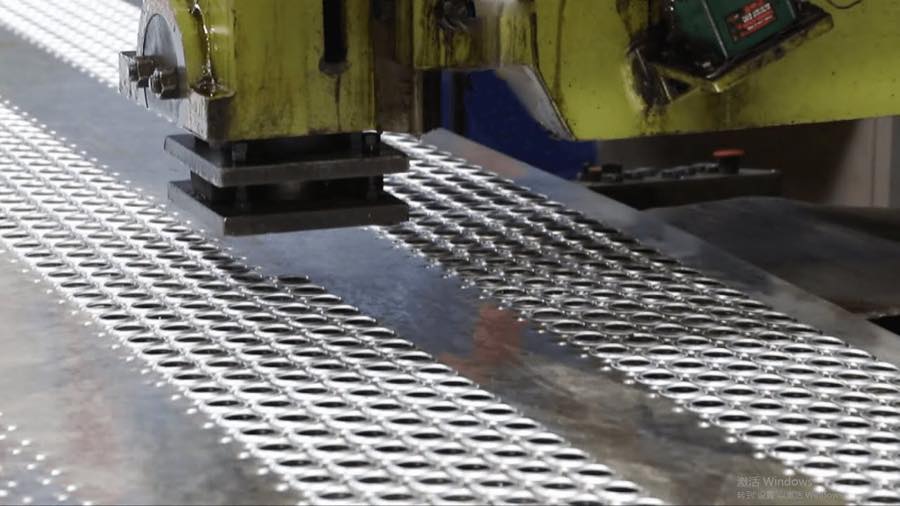
Asking for a video call before placing a fence panel order has become a standard step, but the call answers a narrower question than most buyers assume, and a live call establishes different things than a recorded one. This is about the video-call format itself and about checking that the photos a supplier sends actually match the model you're quoting — not about registration and equipment questions in general (see our guide to choosing a fence panel supplier) and not about inspecting the physical shipment before it ships (see our fence panel inspection checklist). Those are separate steps with separate purposes.
What to Check in a Video Factory Visit
A fence buyer checking a factory over video call should confirm the feed is live rather than recorded, watch the equipment that makes the exact panel type being quoted actually running a job, and see the raw-material and finished-goods areas next to whatever order is on the floor that day — three checks a scripted or recycled video cannot pass together.
To test whether the call is live, ask for something a recording can't produce on demand: have the person on camera hold up today's newspaper or a phone showing the current time, or ask them to pan the camera to a specific spot you name in the moment rather than one they planned to show. A supplier who stalls, asks for time to 'set it up,' or offers only a produced promotional video instead is telling you something about what you're actually being shown.
Ask to see the machine stage relevant to your own specification actually cycling, not just the building or an idle line. For flat welded or double-wire mesh, that's the automatic mesh-welding machine fusing wire at the crossings. For a 3D V-bend panel, it's the forming or bending line putting the corrugation into the flat sheet. For finish, it's the galvanizing bath or the powder-coating line with product actually moving through it. A machine standing still proves it exists, not that it's in use.
Ask to see the raw-material area — coil stock that at least looks consistent with the wire diameter your spec calls for — and the finished-goods area, and ask whether the order currently on the line is the same general category as yours. If you've quoted a 3D bent panel, you should be able to see 3D bending happening that day, not only flat mesh welding with an assurance that bending 'also happens here.'
How to Verify That Product Photos Match the Quoted Model
To check that photos actually correspond to a quoted model, ask for five photos of the same physical panel taken in one sitting: an overall shot, a close-up of the mesh opening, a photo with a tape measure held against the opening, a close-up of a welded intersection, and a shot of the packing or pallet label. Photos that carry their own measurement and their own context are far harder to substitute with a retouched catalogue image than a clean product shot is.
The reason a tape-measure photo is more useful than a polished one isn't aesthetic — it's that a studio shot with even lighting and no scale reference can be reused across different orders, borrowed from a catalogue, or simply not correspond to the batch being discussed, and there's no way for you to check it. A photo where a tape measure is visibly held against the mesh opening lets you calculate the aperture yourself and compare it against your specification, and it ties the image to one physical sample at one point in time rather than a generic product-line photo.
Ask that all five photos be of the same panel, in the same setting, ideally captured in a single short video pass rather than as five separately staged images sent over several days — that makes it much harder for different photos to quietly represent different actual products.
| Photo to request | What it lets you verify |
|---|---|
| Overall panel photo | General panel type, dimensions and finish at a glance |
| Close-up of the mesh opening | Weave or weld pattern — for example single-wire versus double-wire, or the 3D rib profile |
| Tape measure held against the opening | Lets you calculate the aperture yourself and compare it to the specification |
| Close-up of a welded intersection | Whether wires are fused at the crossing rather than only touching (a cold weld) |
| Packing or pallet label | Ties the sample to a specific order or date the supplier can be asked to account for |
What a Video Call Cannot Establish
A video call, however thorough, cannot establish that the batch eventually shipped will come from the same coil of material shown on the call, cannot replace a pre-shipment inspection of the actual goods, and cannot confirm a company's registration or certification status on its own — each of those needs a separate document or a separate process.
What's on the floor during a call is a snapshot, not a running audit. Wire and coating batches change between the day of the call and the day your order is produced, so a live look at today's material doesn't say anything about the material your panels will actually be made from weeks later. Checking that requires the mill or material records for your specific production run, not the call itself.
A video call also isn't a pre-shipment inspection. Confirming equipment exists and is in use is a different question from confirming that a finished batch meets your dimensional, weld and coating tolerances — that requires physically checking the shipment close to loading, which our fence panel inspection checklist covers in detail.
And a camera showing a certificate on a wall, or a supplier stating a certification by name, doesn't verify that certification any more than a claim in an email does — a real check requires a certificate number, the issuing body, its scope and its validity dates, which is a different exercise covered in our guide to assessing a supplier quality claim.
Public Production Footage as a Reference Point, Not a Substitute
As one example of what publicly available production material looks like: JoyLink publishes recorded shop-floor video organized by product line on its Why JoyLink page. That is pre-recorded reference material, not a live call, and it doesn't establish that any specific day's production matches what's shown in it — it's useful only as a general baseline of what the equipment for a given product line looks like, to compare against whatever you're shown on your own live call.